


Air Jordan 1 Royal Is Back and Why This Sneaker Still Matters More Than 40 Years Later
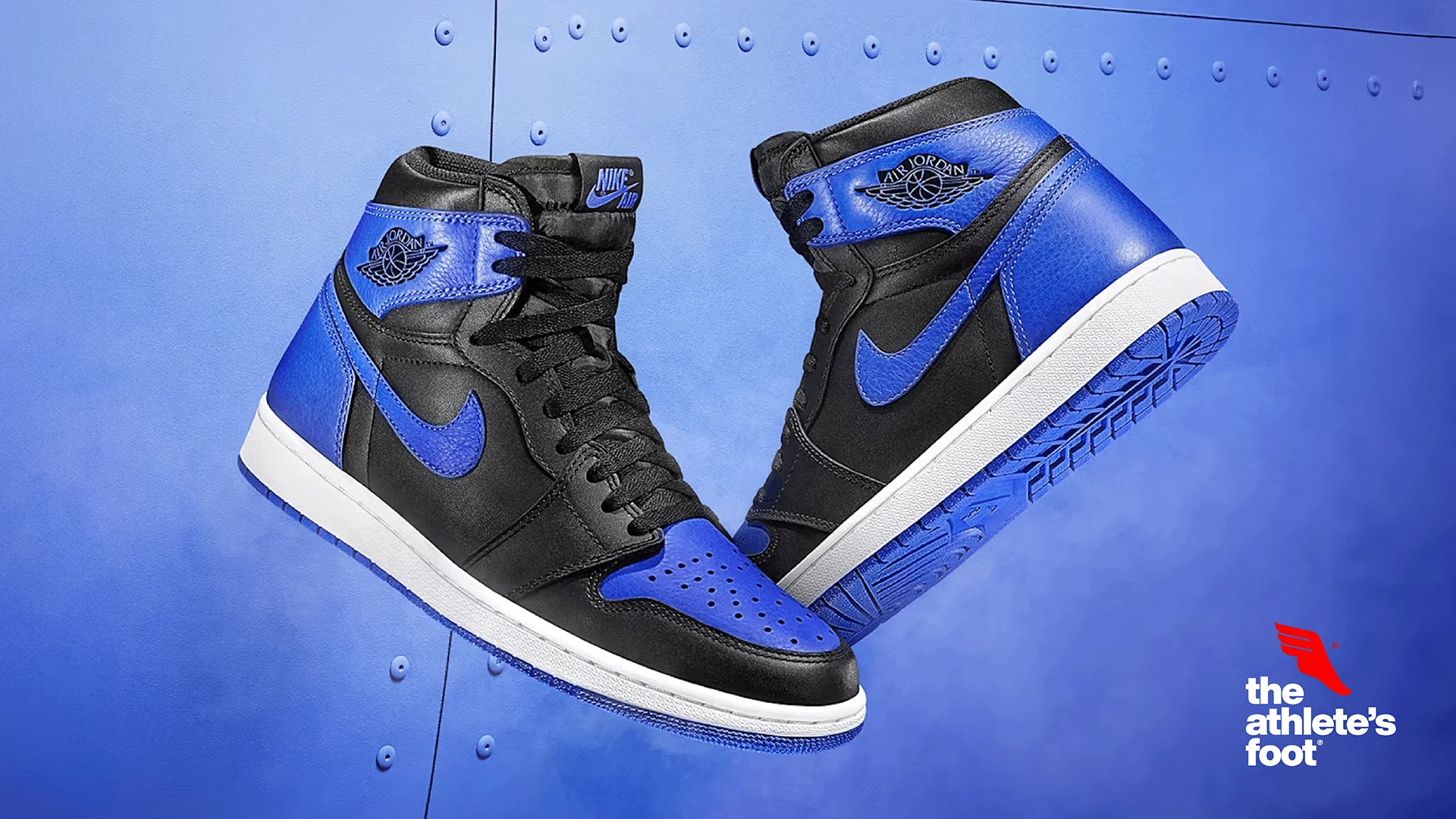
The Air Jordan 1 Royal has never needed much explanation. The black leather, Royal Blue panels, high collar and Wings logo are recognizable enough that even people who do not follow every sneaker release usually know exactly what they are looking at.
On October 10, 2026, the Air Jordan 1 High OG Royal returns to the US market, bringing back one of the original Air Jordan 1 colorways more than four decades after it first appeared. For collectors, that alone makes the release significant, but the more interesting question is why a basketball shoe from 1985 continues to generate attention in a sneaker market that changes almost every week.
The answer begins with the fact that the Air Jordan 1 was never simply another performance shoe. When it debuted in 1985, basketball footwear already existed and athlete endorsements were nothing new, but the scale of the connection between Michael Jordan, Nike and the shoe changed the way consumers thought about both athletes and sneakers. Designed by Peter Moore, the Jordan 1 became the beginning of a signature line that would eventually move far beyond the court and into music, fashion, streetwear and collecting culture.
The Royal colorway occupies an interesting position within that history because it did not depend as heavily on the Chicago Bulls palette. Black and Royal Blue gave the shoe a different kind of identity, one that felt less tied to a uniform and more naturally suited to life away from the court. That distinction became increasingly important as the Jordan 1 evolved from basketball footwear into something much broader.
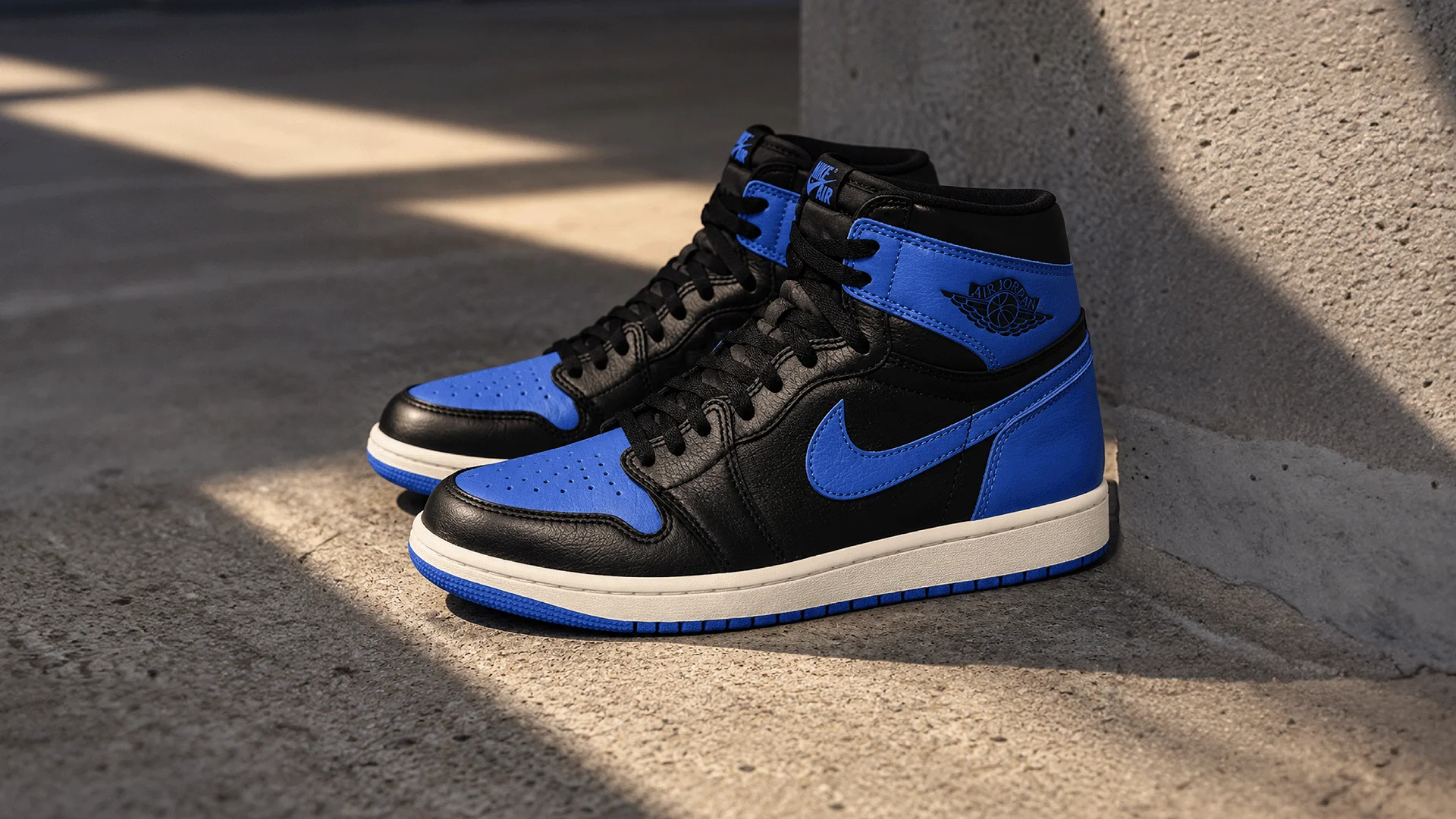
Part of the Royal's appeal is also its simplicity. The black base makes the shoe easy to wear, while the blue gives it enough contrast to remain instantly recognizable. The white midsole breaks up the darker upper and creates the kind of balanced color blocking that still works whether the sneaker is paired with faded denim, black cargos, sweats or more considered fall layering.
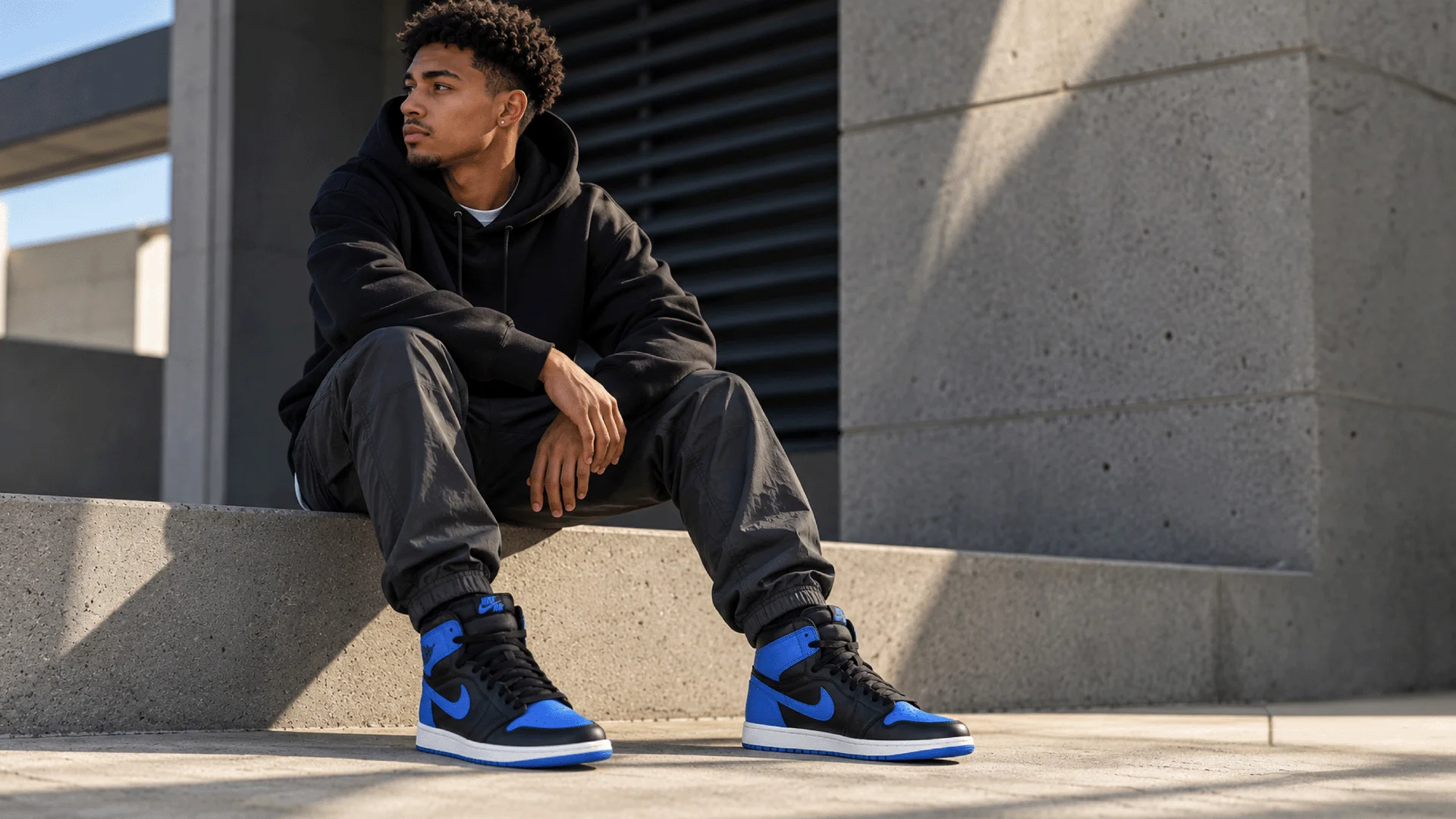
The Air Jordan 1 has also benefited from being able to survive changing fashion cycles without becoming trapped inside any one of them. It has been worn oversized, slim, clean, scuffed, laced tightly, left loose, paired with denim, suits, skirts and just about every generation of streetwear that has appeared since the mid-1980s. Very few sneaker designs remain convincing across that many shifts in style.
That longevity matters even more in 2026 because the sneaker market has become more fragmented. Low-profile shoes, retro runners, technical silhouettes and other basketball models are all competing for attention, which means consumers have more choices and are often more selective about what they actually buy. The Jordan 1 no longer has to dominate the market in the way it did during its most intense resale years, because the original colorways carry enough history to remain relevant without relying on hype alone.
The 2026 Royal release keeps that history intact rather than trying to reinvent the shoe. Nike has returned to the familiar black, white and Game Royal combination, with the high-cut structure, leather upper and Nike Air cushioning that define the model. For longtime collectors, details such as the packaging and connection to early promotional imagery give the release another layer of significance, while for younger consumers the appeal is much simpler.
It still looks good.
That is ultimately why the Air Jordan 1 has endured. There are sneakers with more advanced cushioning, lighter construction and newer technology, but cultural relevance does not always come from technical superiority. Sometimes it comes from a design that becomes recognizable enough to carry meaning across generations.
The Royal has that kind of history.
It belongs to the original Air Jordan story, but it has never felt stuck there. It works because it can still be worn without explanation, whether the person buying it remembers the 1985 release, discovered Jordans ten years ago or is considering their first pair now.
The October 10 release will attract plenty of attention because it is a familiar colorway returning at the right moment, but the reason people still care has much less to do with release calendars than it does with everything the Air Jordan 1 has come to represent.
More than 40 years later, the Royal is still owning its position.


 Get perks as a TAF member
×
Error

Service
Support
Connect
Subscribe to Newsletter
Subscribe to Newsletter
© 2026 TAF Stores USA